Sport psychology
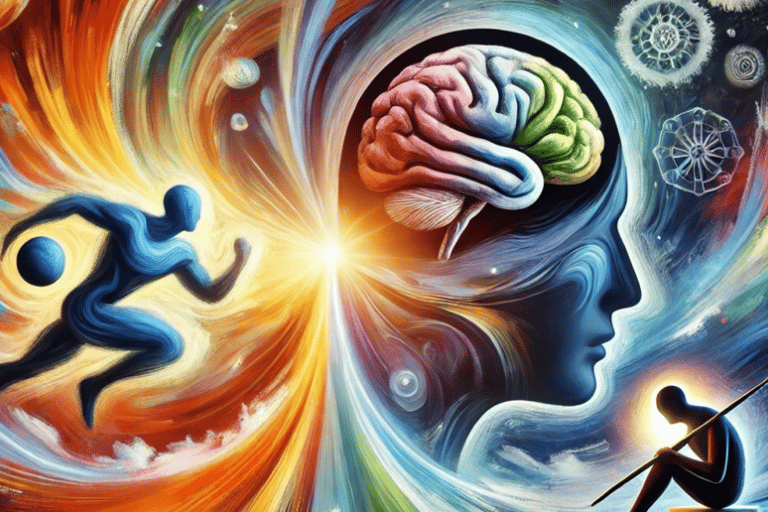
Sport psychology is an interdisciplinary field that deals with the psychological aspects of sport performance, behaviour and well-being. According to the American Psychological Association (APA), it examines how psychological factors influence sporting performance and how sporting activities can promote psychological well-being (APA, 2023). It combines findings from psychology, neuroscience, education and sports science to support athletes, artists and performance-orientated people in their mental development.


Tasks of sports psychology
Sports psychology focusses on three central task areas that are relevant in both competitive and popular sports:
Optimising performance:
Sports psychology helps athletes and performers to develop their mental strength and improve their performance. Techniques such as visualisation, goal setting, self-talk regulation and concentration training are used for this purpose. These methods help to optimally prepare for competitions, performances or exam situations and overcome mental blocks (Weinberg & Gould, 2019; Williams & Krane, 2021).Personal development and mental health:
Another focus is on promoting self-confidence, resilience and emotional intelligence. Sports psychology helps to deal with pressure, setbacks and challenges and to maintain a positive attitude. It also assists in coping with injuries and career transitions by providing strategies for mental strengthening and motivation (Sarkar & Fletcher, 2014; Wylleman et al., 2004).Team dynamics and communication:
In team sports or artistic ensembles, sport psychology promotes positive team dynamics and effective communication. It helps to resolve conflicts, strengthen cohesion and create a supportive atmosphere (Carron & Eys, 2012).
Framework conditions of sports psychology
The work of sports psychology takes place within a clear framework. It is based on scientific findings and psychological theories such as self-determination theory, which emphasises the importance of autonomy, competence and social integration for motivation (Deci & Ryan, 1985) and flow theory, which describes the state of optimal performance flow (Csikszentmihalyi, 1990). In addition, sport psychologists are subject to strict ethical guidelines that ensure confidentiality, respect and integrity (APA, 2023). Interdisciplinary collaboration with trainers, doctors, physiotherapists and nutritionists is another important aspect in order to ensure holistic care (Henriksen et al., 2020).
The mental component is a decisive factor for success and satisfaction in sport and art. Many athletes and artists reach a high technical level, but it is the mental strength that makes the difference. Sports psychology helps to build and maintain this mental strength (Weinberg & Gould, 2019).
150+
15
Vertrauen Sie uns
Expertise zeigt
American Psychological Association (APA). (2023). What is Sport Psychology?
Carron, A. V., & Eys, M. A. (2012). Group Dynamics in Sport. Fitness Information Technology.
Csikszentmihalyi, M. (1990). Flow: The Psychology of Optimal Experience. Harper & Row.
Deci, E. L., & Ryan, R. M. (1985). Intrinsic Motivation and Self-Determination in Human Behavior. Springer.
Henriksen, K., Schinke, R., Moesch, K., McCann, S., Parham, W. D., Larsen, C. H., & Terry, P. (2020). Consensus statement on improving the mental health of high-performance athletes. International Journal of Sport and Exercise Psychology, 18(5), 553-560.
Sarkar, M., & Fletcher, D. (2014). Psychological Resilience in Sport Performers: A Review of Stressors and Protective Factors. Journal of Sports Sciences.
Weinberg, R. S., & Gould, D. (2019). Foundations of Sport and Exercise Psychology. Human Kinetics.
Williams, J. M., & Krane, V. (2021). Applied Sport Psychology: Personal Growth to Peak Performance. McGraw-Hill Education.
Wylleman, P., Alfermann, D., & Lavallee, D. (2004). Career Transitions in Sport: European Perspectives. Psychology of Sport and Exercise.
Legal Notice Privacy Policy
Contact
+49 176 43537488
contact@mentalperformancecoach.de
Mira Pielsticker, MSc
Psychotherapist, M.Sc. Clinical Psychology and Psychotherapy, Sport Psychologist, Stage Dancer, Dance Educator, Choreographer, Musical Performer